Calcium Deficiency in Dairy Animals: Causes, Signs & Treatment
Understand the causes and consequences of calcium deficiency (hypocalcemia) in dairy animals and learn evidence-based prevention strategies including anionic mineral supplementation.
Overview
Calcium is the most abundant mineral in the dairy cow's body and plays critical roles in muscle contraction, nerve transmission, blood clotting, enzyme activation, and structural integrity of bones and teeth. During the onset of lactation, calcium demands surge dramatically as colostrum and early milk contain 2.0-2.3 g of calcium per liter.
Understanding the Problem
Clinical hypocalcemia (milk fever) affects 5-10% of dairy cows at calving, with subclinical hypocalcemia affecting up to 50% of multiparous cows. Subclinical hypocalcemia, though not immediately apparent, significantly increases the risk of displaced abomasum, retained placenta, metritis, ketosis, and mastitis in the weeks following calving.
Prevention & Management Strategies
The periparturient calcium challenge occurs because hormonal changes required to mobilize calcium from bones and increase intestinal absorption take 24-48 hours to fully activate. During this lag period, blood calcium levels can drop from the normal 9-10 mg/dL to below 8 mg/dL (subclinical) or below 5.5 mg/dL (clinical milk fever).
Treatment & Supplementation
Prevention strategies include feeding anionic mineral mixtures during the close-up dry period (21 days pre-calving) to induce a mild metabolic acidosis that primes calcium homeostasis mechanisms. Monitoring urine pH (target 6.0-6.5 for Holsteins, 5.8-6.2 for Jerseys) confirms adequate anionic diet effect.
Shyne Pharmaceutical Solutions
Shyne Pharmaceutical's Shyne Cal Gold provides rapidly bioavailable calcium in oral bolus and liquid formulations designed for immediate calcium supplementation at calving. Combined with pre-calving anionic mineral programs using Shynmix Gold, dairy farmers can significantly reduce both clinical and subclinical hypocalcemia incidence.
Author: Shyne Pharmaceutical Veterinary R&D Team — WHO-GMP certified manufacturer of organic rumen care, feed supplements, and veterinary nutrition products.
Frequently Asked Questions
Q: What is milk fever in cattle?
Milk fever (clinical hypocalcemia) is a metabolic disorder occurring at or near calving when blood calcium drops below 5.5 mg/dL. Symptoms include muscle tremors, recumbency, cold ears, dilated pupils, and without treatment, death within 12-24 hours.
Q: How can anionic mineral mixtures prevent milk fever?
Anionic mineral mixtures create a mild metabolic acidosis in pre-calving cows that stimulates calcium mobilization from bones and increases intestinal calcium absorption, so the cow's calcium homeostasis is already activated when lactation demands surge at calving.
Recommended Products for Mineral Nutrition
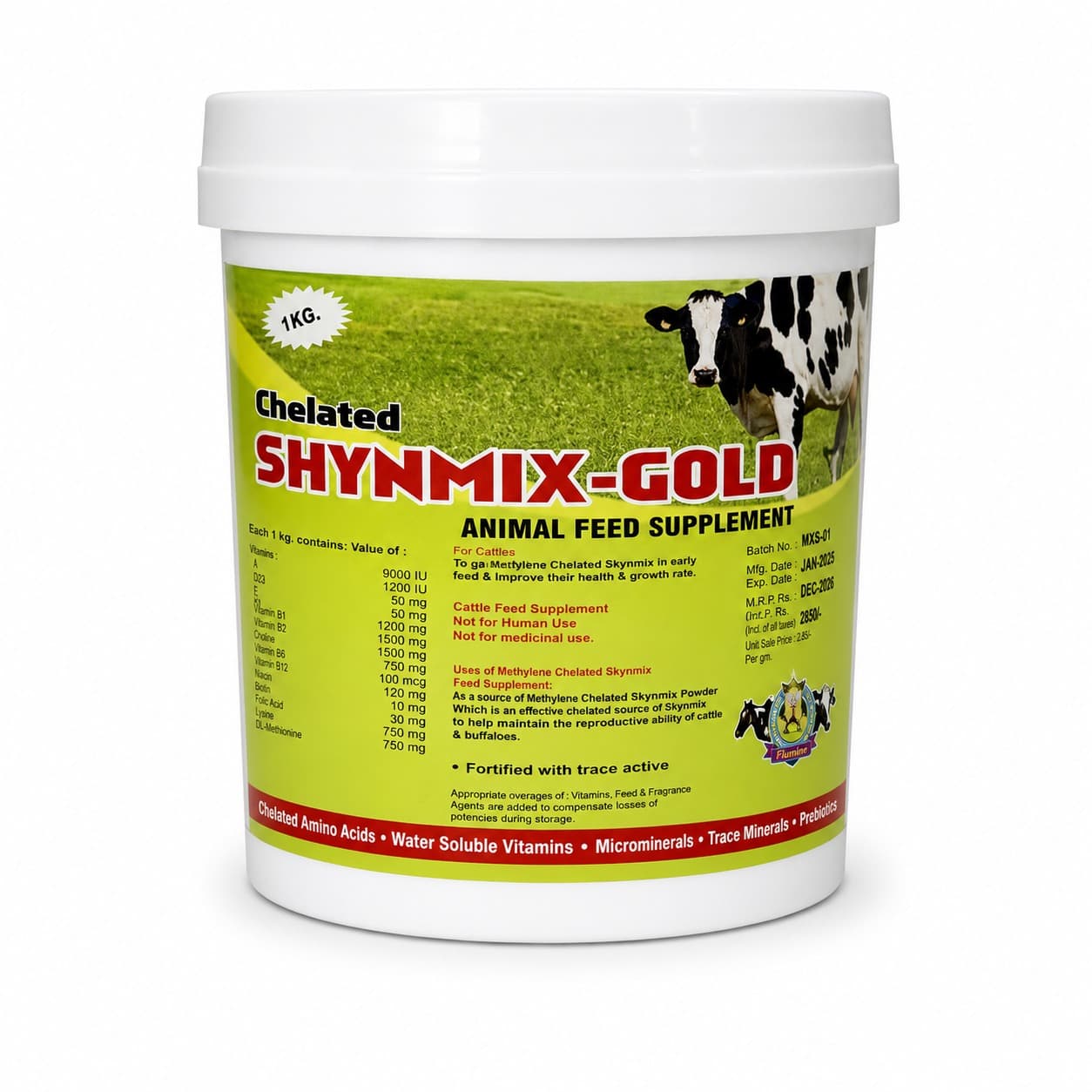
Shynmix-Gold
Premium chelated mineral and vitamin feed supplement engineered with methylene chelation technology for milk yield and reproduction.