Heat Stress Management in Livestock: Prevention & Treatment
Understand how heat stress impacts dairy production and learn evidence-based strategies for electrolyte supplementation, cooling management, and nutritional support during hot weather.
Overview
Heat stress is one of the most economically significant challenges facing Indian dairy farmers, causing estimated annual losses of ₹1,000-1,500 per animal through reduced milk yield, impaired reproduction, increased disease susceptibility, and in severe cases, mortality. When the Temperature-Humidity Index (THI) exceeds 72, dairy cattle begin experiencing physiological stress responses.
Understanding the Problem
Clinical signs of heat stress include elevated respiratory rate (>80 breaths/min), excessive panting with open-mouth breathing, reduced feed intake (up to 25-40% decrease), decreased milk production (10-25% drop), standing instead of lying, seeking shade, and increased water consumption. Buffalo are particularly susceptible due to fewer sweat glands and darker skin pigmentation.
Prevention & Management Strategies
Prevention strategies should combine environmental management (shade structures, fan-mist cooling systems, adequate water access), nutritional interventions (electrolyte supplementation, increased mineral density, bypass fat inclusion), and feeding schedule modifications (shifting 60-70% of daily feed to evening hours when temperatures drop).
Treatment & Supplementation
Electrolyte supplementation is critical during heat stress periods. Sodium, potassium, and chloride losses through sweat and increased respiration must be replenished to maintain acid-base balance and cellular hydration. Shyne Pharmaceutical's Stress-Go is specifically formulated with balanced electrolytes, vitamin C, and adaptogens to combat heat stress and restore metabolic equilibrium.
Shyne Pharmaceutical Solutions
Long-term heat stress management requires an integrated approach including genetic selection for heat tolerance, structural modifications to housing for improved ventilation and cooling, implementation of precision feeding programs, and proactive veterinary monitoring of blood metabolites and reproductive performance during summer months.
Author: Shyne Pharmaceutical Veterinary R&D Team — WHO-GMP certified manufacturer of organic rumen care, feed supplements, and veterinary nutrition products.
Frequently Asked Questions
Q: At what temperature do dairy cattle experience heat stress?
Dairy cattle begin experiencing heat stress when the Temperature-Humidity Index (THI) exceeds 72. For Holstein cattle, significant milk yield losses begin at ambient temperatures above 25°C with high humidity.
Q: How much milk yield is lost due to heat stress?
Heat stress can reduce daily milk yield by 10-25% depending on severity and duration. In severe cases with THI above 85, yield losses can exceed 30% and may be accompanied by reproductive failure.
Recommended Products for Heat Stress
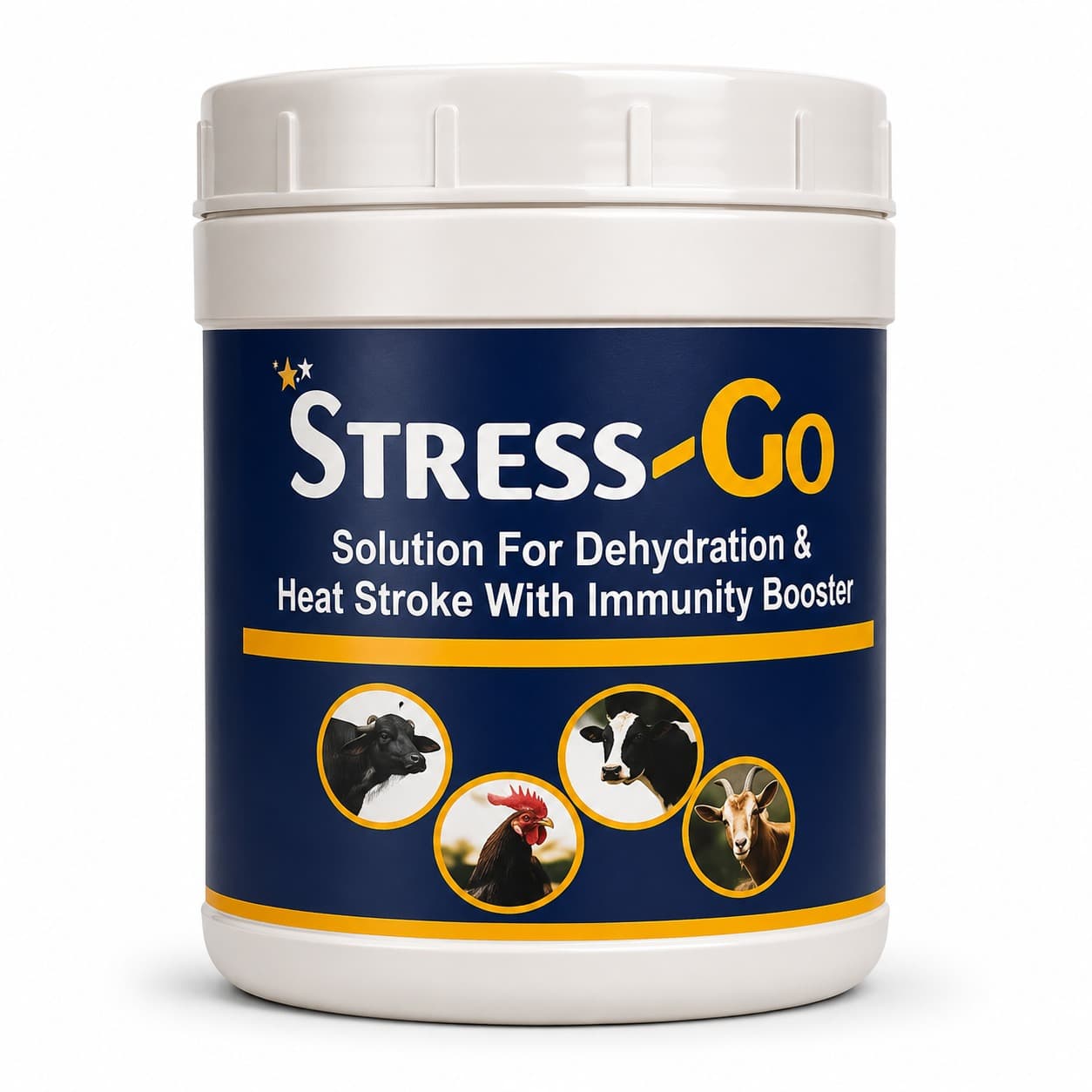
Stress-Go
Oral electrolyte and vitamin supplement that restores fluid-electrolyte balance during heat stress, transport, and dehydration.