Dairy Farm Management: Best Practices for Indian Farmers
Comprehensive guide to modern dairy farm management in India covering nutrition programs, health monitoring, reproductive management, and strategies for maximizing herd profitability.
Overview
Profitable dairy farming in India requires a systematic approach to herd management that integrates nutrition planning, health monitoring, reproduction management, housing optimization, and financial record-keeping. The difference between a profitable and unprofitable dairy operation often lies not in the genetic potential of the herd, but in the management practices applied.
Understanding the Problem
Nutrition management should be organized by production groups: fresh cows (0-21 days in milk), high-production group (21-150 DIM), mid-production group (150-250 DIM), late lactation/dry cows, and close-up pre-calving cows. Each group has distinct nutritional requirements that must be addressed with specifically formulated Total Mixed Rations (TMR) or component feeding programs.
Prevention & Management Strategies
Preventive health management is far more cost-effective than treating disease. Establish a comprehensive vaccination schedule, regular deworming program, metabolic disease prevention protocol (especially for the transition period), and systematic mastitis control program including pre and post-milking teat dipping, proper milking machine maintenance, and dry cow therapy.
Treatment & Supplementation
Reproductive management directly impacts dairy profitability. Target key performance indicators: voluntary waiting period of 45-60 days, first service conception rate above 40%, calving interval under 400 days, and days open under 120. Implement estrus detection programs, timely artificial insemination, pregnancy verification at 30-45 days, and systematic management of repeat breeders.
Shyne Pharmaceutical Solutions
Shyne Pharmaceutical supports dairy farm profitability through its comprehensive product portfolio addressing every phase of the production cycle — from transition cow management with Shyne Cal Gold to peak lactation support with chelated minerals, heat stress management with Stress-Go, and rumen health optimization with organic rumen care products.
Author: Shyne Pharmaceutical Veterinary R&D Team — WHO-GMP certified manufacturer of organic rumen care, feed supplements, and veterinary nutrition products.
Frequently Asked Questions
Q: What is the ideal calving interval for dairy cattle?
The ideal calving interval is 12-13 months (365-400 days). This requires conception within 85-120 days after calving. Longer calving intervals reduce lifetime milk production and increase the cost of maintenance per liter of milk produced.
Q: How can I improve dairy farm profitability?
Focus on reducing feed costs per liter of milk (the single largest expense), improving reproductive efficiency, minimizing disease incidence through prevention, optimizing milk quality for premium pricing, and maintaining accurate financial records to identify and address inefficiencies.
Recommended Products for Farm Management
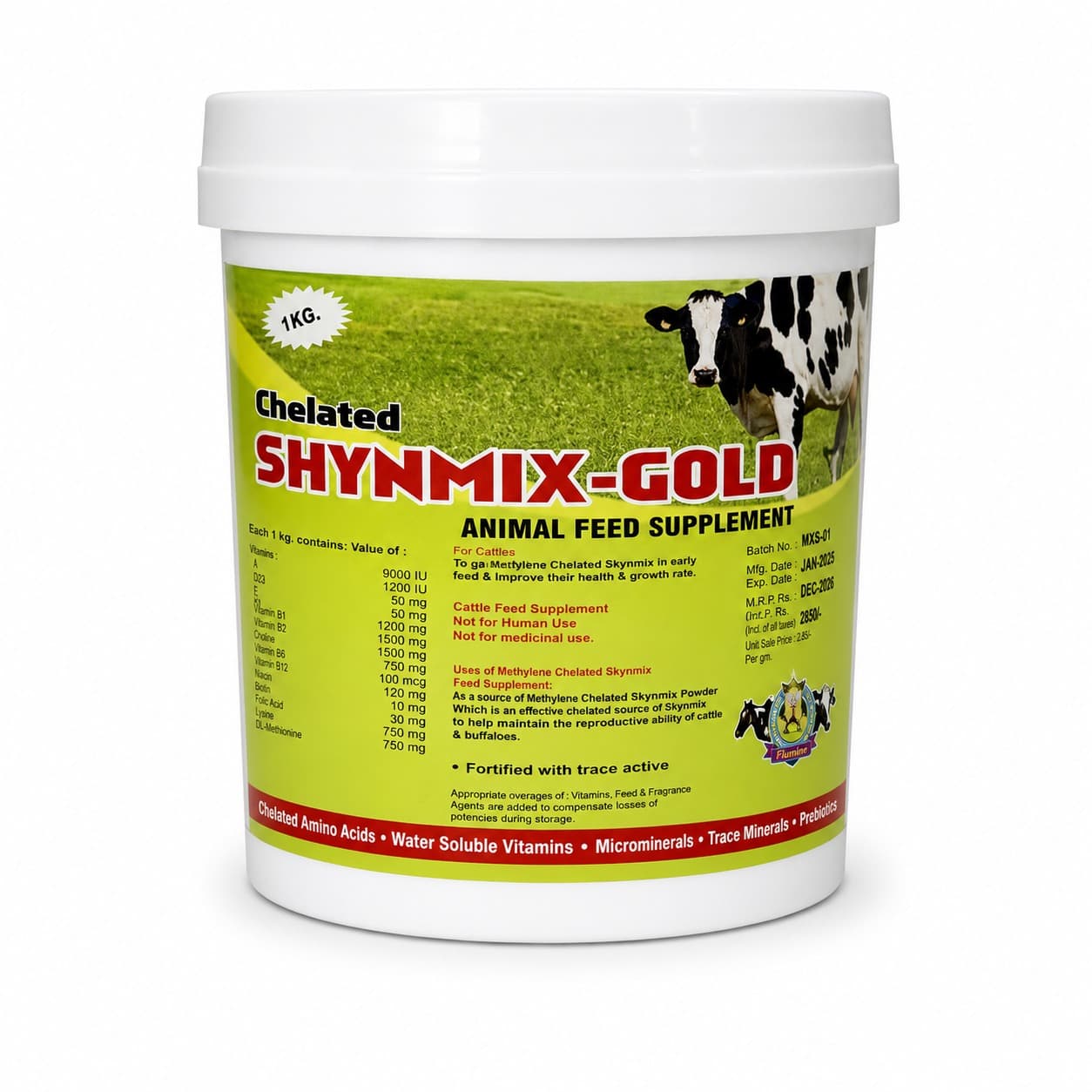
Shynmix-Gold
Premium chelated mineral and vitamin feed supplement engineered with methylene chelation technology for milk yield and reproduction.

Stress-Go
Oral electrolyte and vitamin supplement that restores fluid-electrolyte balance during heat stress, transport, and dehydration.